
The word “revolution” is most often misclassified as chaos, upheaval, or sudden change. But as someone living in the AI revolution, deeply immersed in it, I can confirm it is not a typical revolution. It is not loud. It does not lead to protests. It does not announce itself. Yet, it is happening. And for students like me, that leaves us at a crossroads.
The conventional view is that the AI revolution will make students struggle to find jobs, fall behind in skills, and fail to adapt to the competitive landscape. But a closer examination reveals something more sinister. AI is here, yet somehow, we do not know what it is. We do not fully understand it. Its role in society is dysfunctional. Unclear. And yet, we, as students, have blindly accepted its presence, rarely stopping to question what we are gaining or losing in the process.
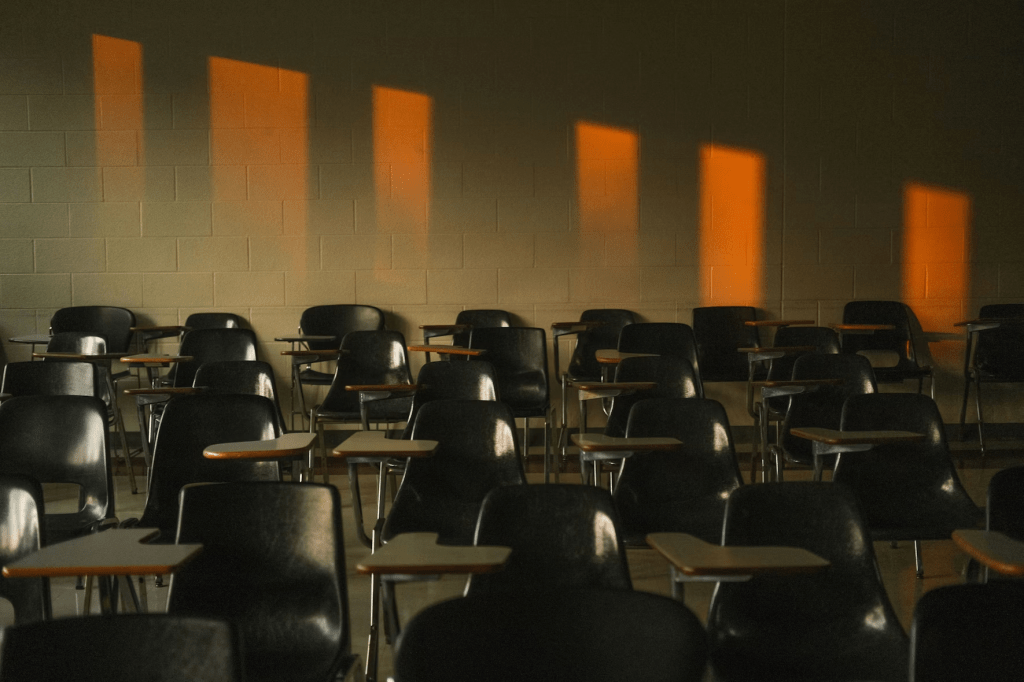
The use of AI goes beyond just cheating or copying homework. It actively shapes how students are produced. Schools have long functioned as factories, manufacturing future doctors and lawyers who have the highest grades and most accolades. Artificial Intelligence simply accelerates this machinery. In classrooms today, AI is doing the work we are meant to do. Every problem, every minor inconvenience or task, is handled by it. We might sit at a table, attend a lesson, nod at a teacher, but it is AI that truly occupies the learning. Classrooms shift from sanctuaries of thought into irrelevant spaces. Critical thinking is rare. Experimentation is uncommon. We do not critique the educational norms around us. We are learning less to use our own minds and more to rely on a system that solves everything before we even begin.
Banning AI, despite what schools may think, is not the solution. Installing AI detectors is not the solution. These measures only make AI harder to detect while leaving the real problem untouched.
The real issue is how we are being taught to learn. If classrooms continue as they always have, this problem will only worsen. Students will no longer be the soldiers of the future—AI will. And the only way to eradicate this is to change the curriculum itself. Students need to be taught to work with AI, not around it.
Many have proposed “AI curricula” that focus on discussion or reflection, but any student currently living through the revolution knows this is insufficient. Students will never realistically stop using AI as a tool, not after the exposure and accessibility it has achieved.
So does this mean we are doomed to coexist with AI without a sustainable, ethical approach? Or can we find a way to educate ourselves that allows AI to amplify our minds and our thinking?
The word “revolution” shouldn’t imply we are being conquered; it should imply we are being equipped. If AI has mastered the art of The Essay or The Exam, then let us stop using those as the primary tools to test intelligence.
The real, physical world becomes our survival mechanism and our greatest opportunity. We should trade six hours of isolated, repetitive homework for six hours of active problem solving. Imagine students with the freedom to be creative, brainstorming solutions for local communities and enhancing the world around them. Perhaps then, we may finally begin to value ideas and thoughts more than we idealize money.
By pushing students out of the factory and into reality, we learn that AI is not our replacement. It is our leverage. You cannot automate empathy or outsource a handshake. We rise above being mere soldiers of the future. We become the architects. We lead the revolution.
The revolution has just begun. Perhaps, the perfect curriculum does not exist yet. Perhaps it never will. And yet if we can step out of our worlds and into the real one, we can learn to think and experiment in a way that surpasses AI’s ability. There is a future where creativity and judgement are the true boons of society. We just need to shape it.
 Aithos
Leave a comment